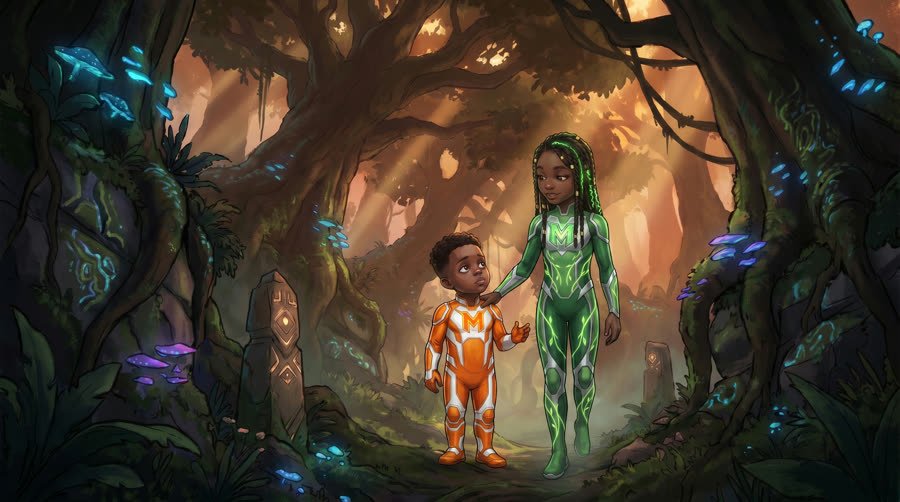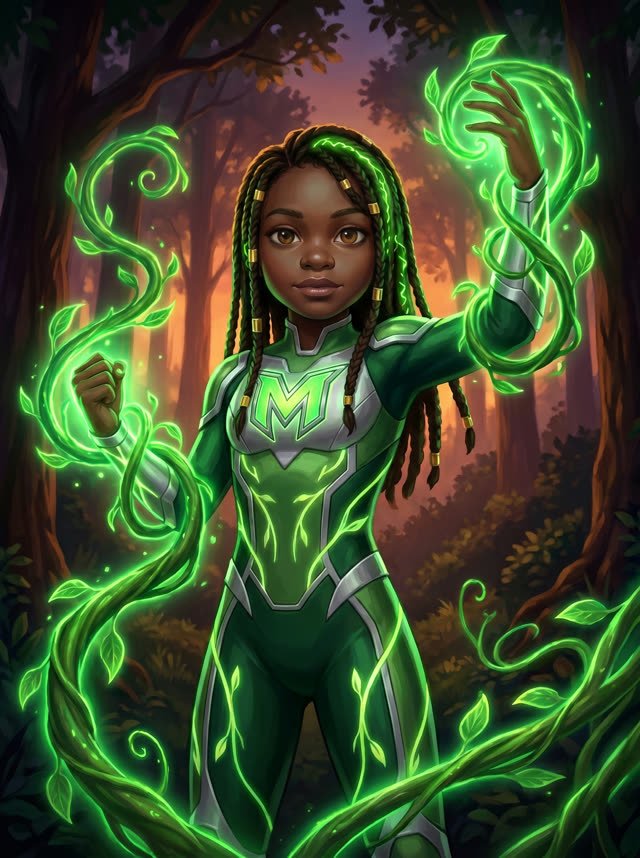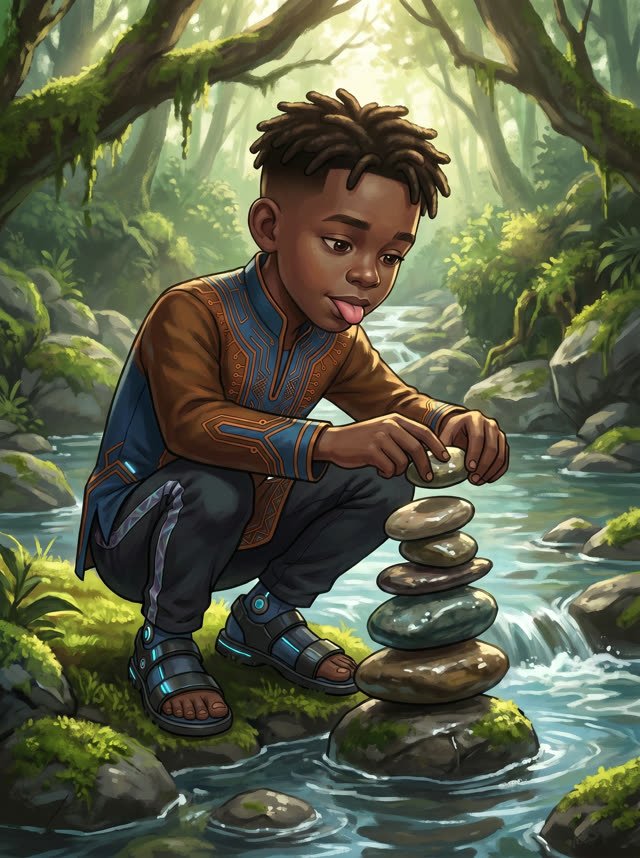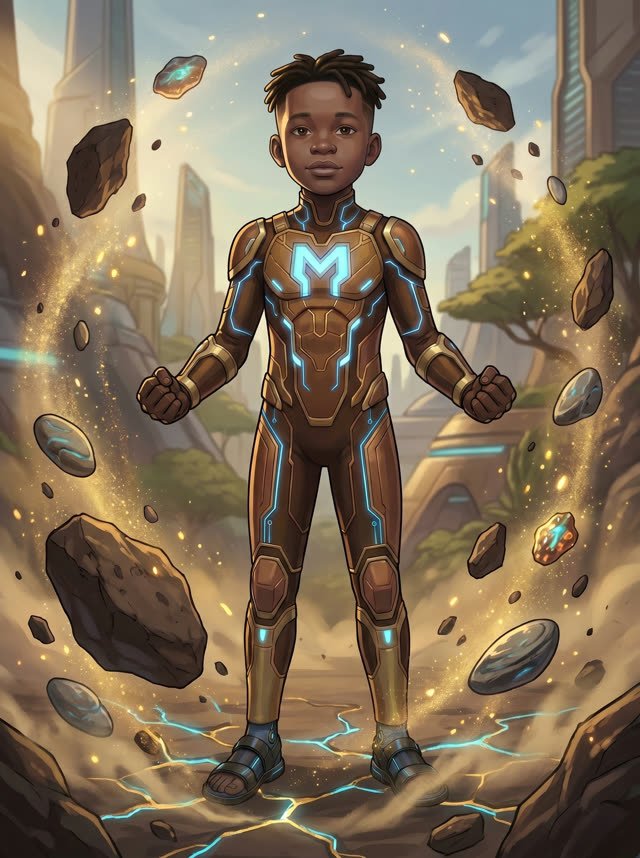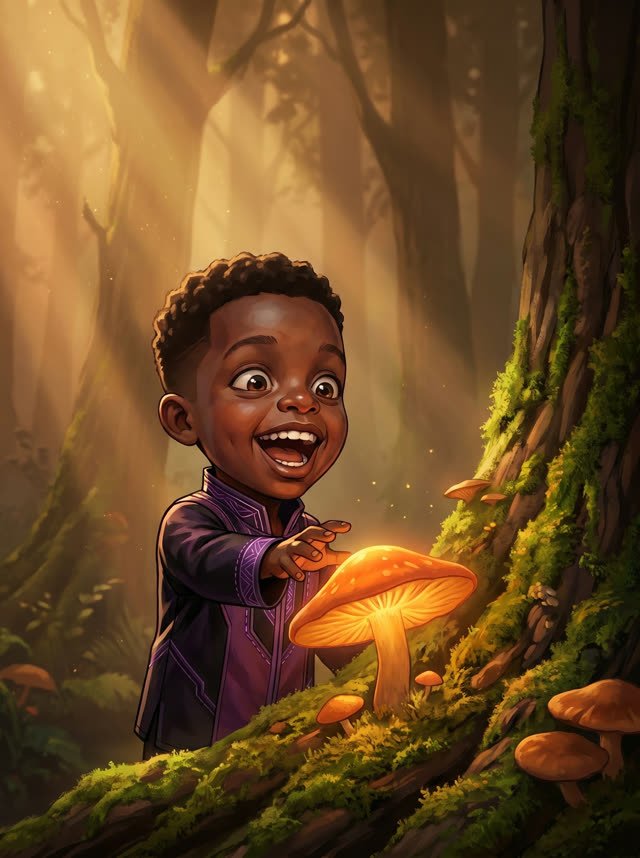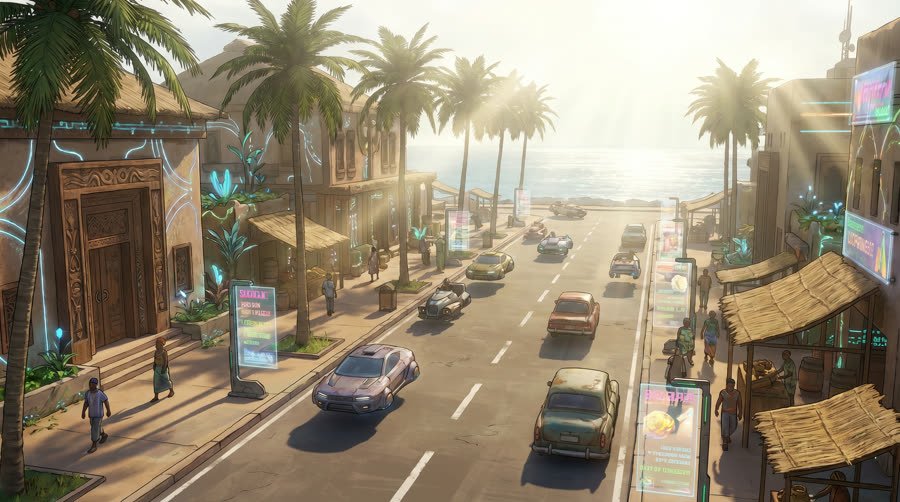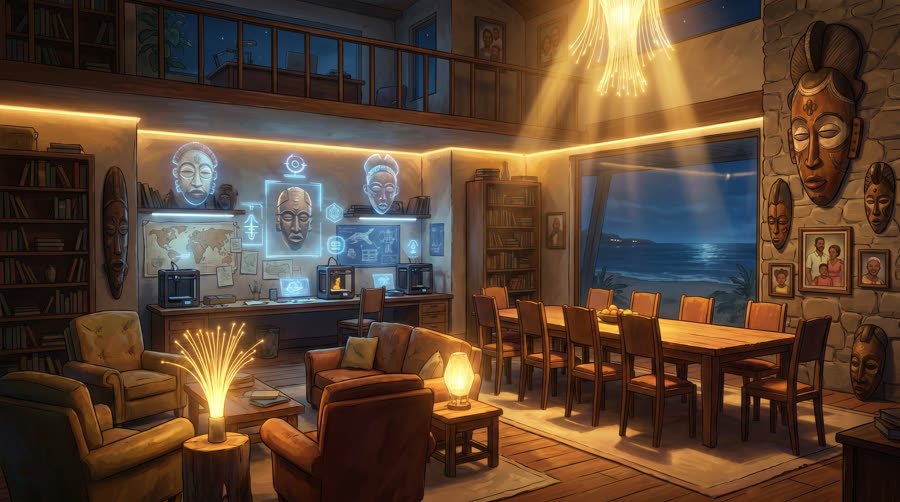
Five sibling superheroes whose powers send them on a journey through the cultures of the world — starting in 2057 Afrofuturist Cameroon. Episodes 0 and 1 are already produced, with two original theme songs. Our AI-agent pipeline makes a weekly release schedule — 52 episodes a year — genuinely affordable. We're raising to build the episode cache and the audience.
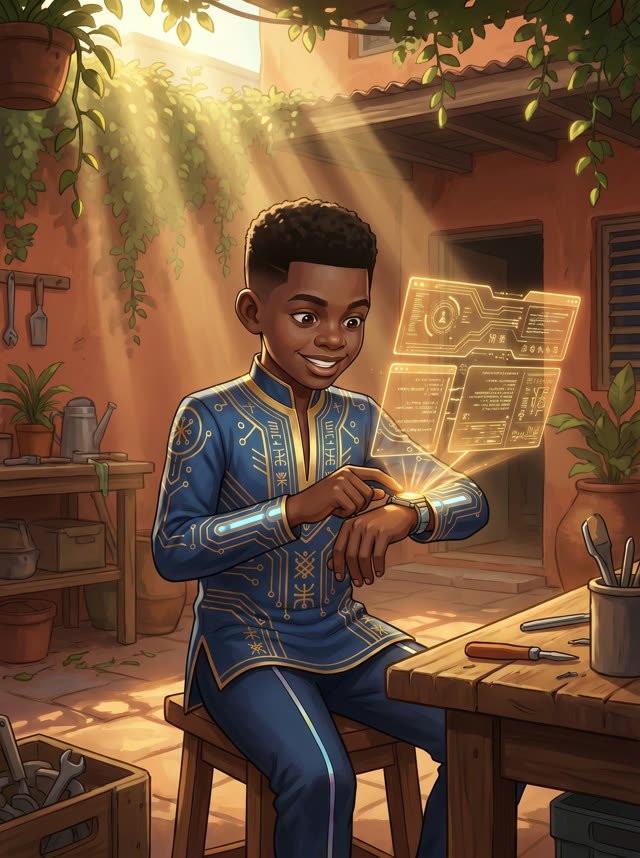
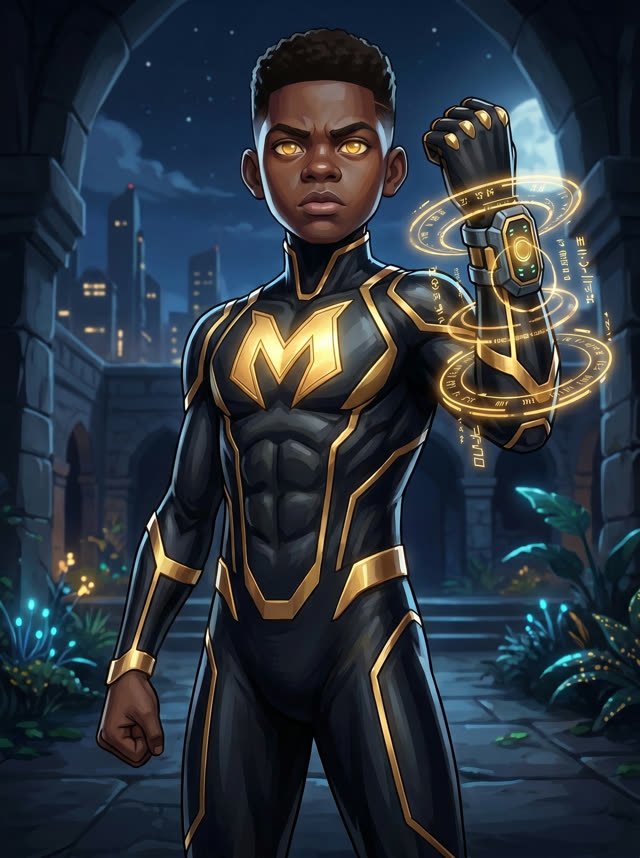
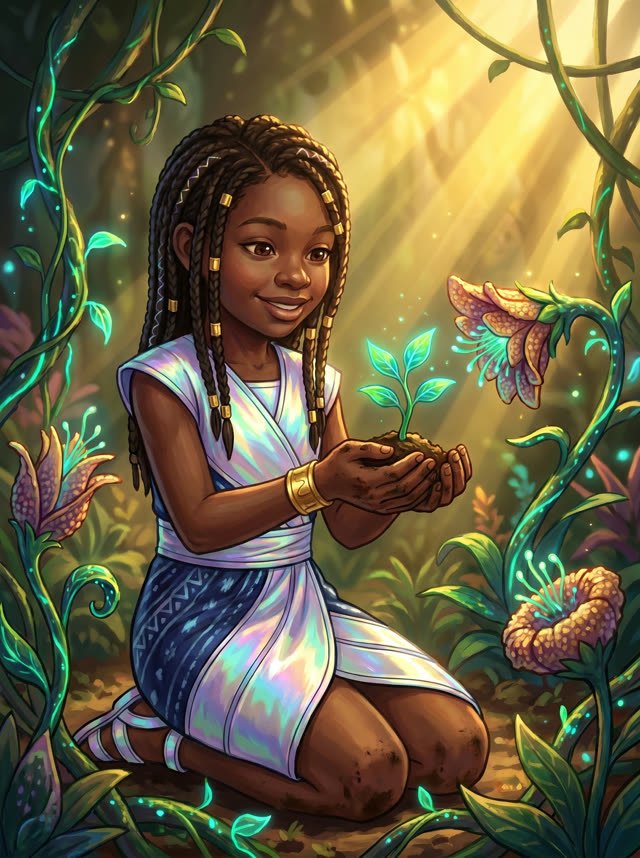
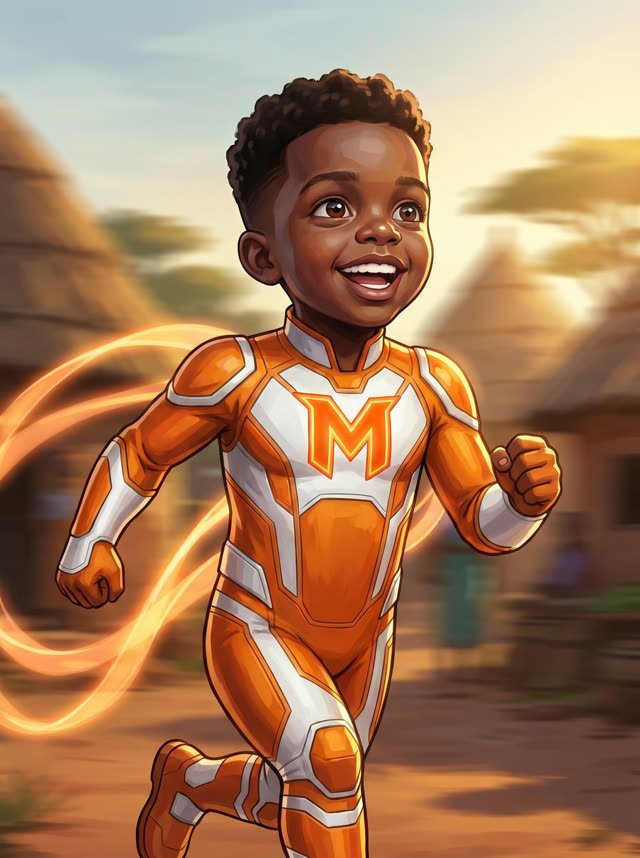
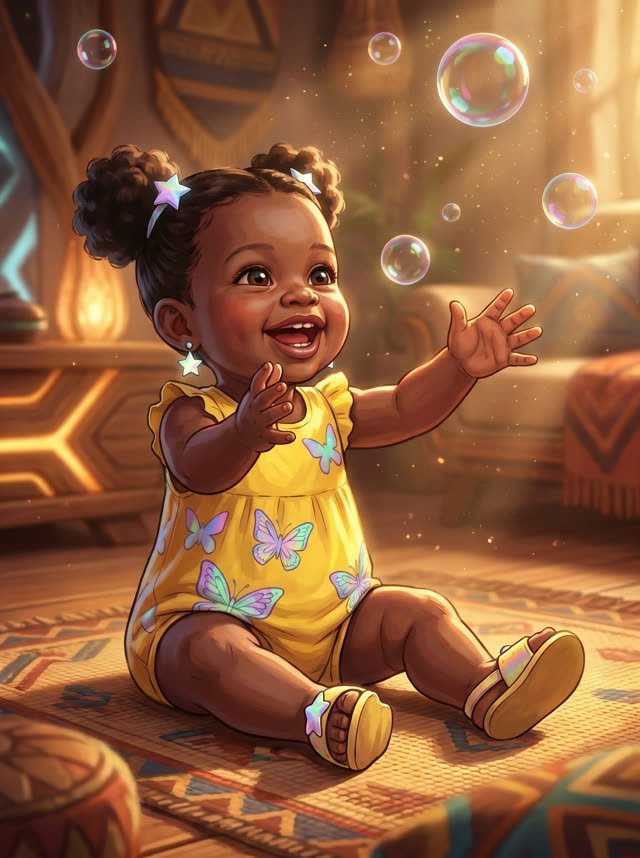
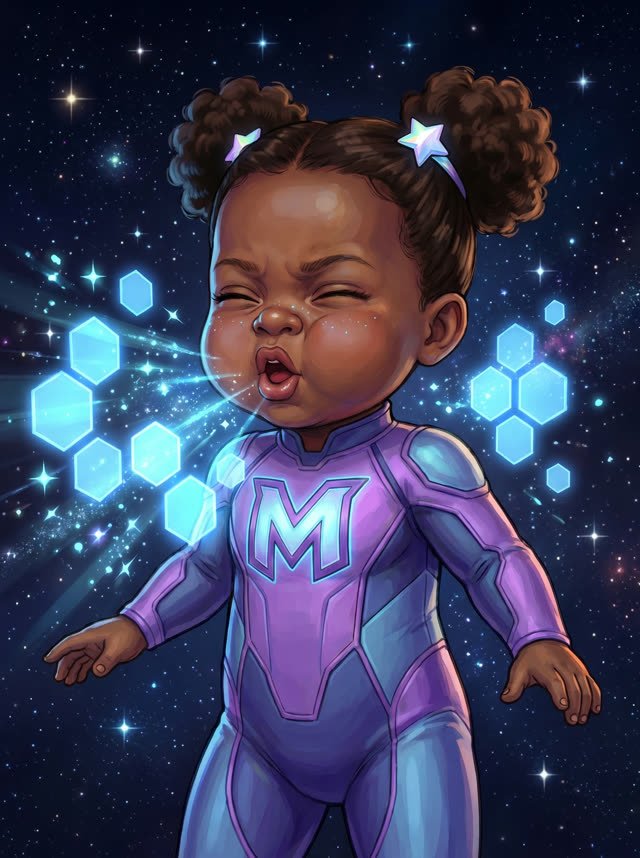
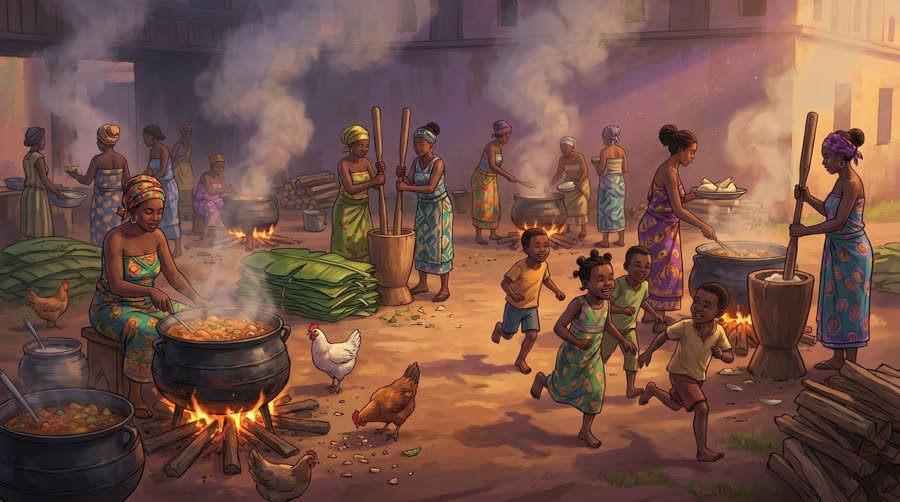
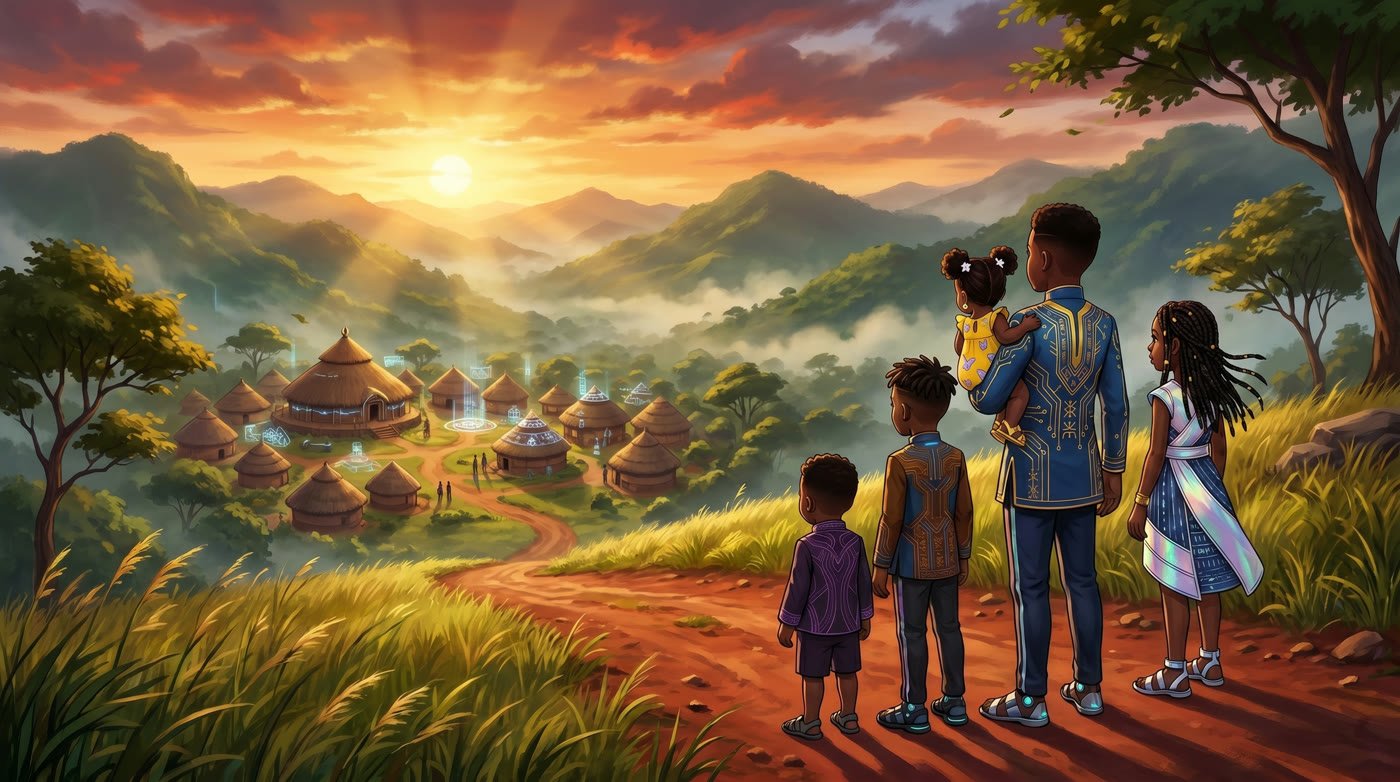
The Mbeng's follows five siblings — Atembe (10), Eliora (9), Amun Ra (7), Heru (3) and baby Luna — as their awakening powers carry them from region to region and country to country: across Cameroon, into other African nations, on to Europe, and beyond. Each stop opens up a new heritage — its food, its language, its history — starting with the Bangwa traditions of Lewoh in Episode 1. Painterly, cel-shaded animation in the visual lineage of Arcane. Faith, family and open-minded curiosity woven through every journey.

Hover a card — or tap on mobile — to flip each sibling into their superhero side.
Tap to flip
Tap to flip
Tap to flip
Tap to flip
Tap to flip


Season 1 opens in Cameroon — Bangwa tradition first, because that's home. From there the siblings' powers carry the show onward: other Cameroonian regions, other African nations, then Europe, and an Asian episode built around food and everyday culture. The premise isn't "an African show" — it's a curious family discovering the whole world, one heritage at a time.

Episode 0 and Episode 1 — S01E01 “The Blood of the Fon: Return to Lewoh” — have been produced end-to-end with our agentic pipeline: scripts, storyboards, 85+ finished shots per episode, a 35-second Bond-style opening title sequence, two original theme songs, and a full character & location bible that makes every future episode cheaper than the last.
On YouTube, cadence compounds. Weekly uploads train the algorithm, build ritual viewing habits in kids, and give advertisers a predictable slate. Traditional animation can't do weekly at indie budgets — our pipeline can. The raise funds a pre-built episode cache so we never miss a week, with episodes timed to the calendar our audience actually lives: back-to-school, harvest festivals, Christmas, Youth Day, exam season.
Every generation is logged. Episode 1 consumed ~80,000 OpenArt credits (Nano Banana Pro stills + Seedance 2.0 video) — about $75 in generation — plus roughly $50 of AI reasoning: the agent time that writes, storyboards, directs and assembles. A comparable traditionally-animated episode costs $50,000–$300,000. That gap is the entire thesis.
| Episode 1 — actuals | Credits | USD* | Evidence |
|---|---|---|---|
| Generation credits consumed | ~80,000 | ~$75 | Account ledger + per-shot generation logs |
| — of which productive (keeper shots + reference bible) | ~48,000 | ~$45 | ~90 final shots, character sheets, 22 locations, title sequence |
| — of which waste (retakes, rejected variants) | ~32,000 | ~$30 | ~432 files on disk; 9 variants of one shot, 31-file alt folder, 7 rejected location concepts |
| AI reasoning — agentic writing, storyboarding, direction | — | ~$50 | Agent subscription share for the episode |
| Episode 1 all-in AI cost | ~$125 | vs $50k–300k for traditional animation |
*USD from the creator's actuals: ~80,000 credits ≈ $75 (effective ~$0.94 per 1,000 credits on the annual plan). Verified platform unit prices (July 2026, after discount): 2K still ≈ 36 credits · video per second: 480p 31.5 · 1080p 180 · native 4K 360. Excludes human time — budgeted in the Ask below. Full worksheet available in the data room.
Episode 1 was our film school. Every failure mode is documented in a production rulebook the AI agents now follow. And the quality ceiling just moved: our video model generates native 4K (verified on our account, July 2026) — no more generating at 480p and losing detail to upscaling.
| Quality tier | Per episode — AI all-in* | 52-episode year — AI | Full production budget† |
|---|---|---|---|
| 480p (Episode-1 quality) | ~$80 | ~$4,200 | ~$38,000 |
| 1080p native | ~$180 | ~$9,300 | ~$44,000 |
| Native 4K — recommended | ~$300 | ~$15,500 | ~$51,000 |
*Generation credits + ~$50/episode AI reasoning, ≤15% retake margin, ~90 shots per episode, reference bible already built. †Adds creator stipend, equipment, music & software and ~10% contingency — the full breakdown is in the Ask below. Marketing is budgeted separately.
Composition is locked with an $0.08 still before spending $0.41–0.81 per second of video. Nothing goes to video un-approved.
Exact credit quote pulled and confirmed before any video batch is submitted — a standing rule in the pipeline, not a habit.
Locked character sheets, spatial maps and multi-angle location stills eliminate the identity drift that caused most Episode 1 retakes.
One 10-second multi-act clip replaces 3–4 separate generations — proven on the title sequence and Episode 1's final scene.
Script-to-shot ratios, a named camera-move library, spatial zone maps — coverage is planned once, not re-shot into existence.
B-roll, locations and title graphics carry across episodes. Every episode makes the next one cheaper.
Even at full native 4K, a year of 52 weekly episodes costs less in AI fees than one minute of traditional animation.
The honest math: YouTube pays 10–15× more for a viewer in New York, London or Paris than in Lagos or Douala (US CPM ≈ $33 vs Nigeria ≈ $2.50–3). Millions of African diaspora families in the US, UK, France, Germany and Canada are actively searching for content that connects their kids to home — and they watch from the world's highest-value ad markets. We program for African kids everywhere, and monetize where the CPMs are.
“Made for kids” rules (COPPA) block personalized ads, cutting AdSense RPM to roughly $0.30–3. So YouTube ads are the floor, not the plan. Kids-media businesses are built on brand deals, licensing and products — and our production-cost advantage means even modest revenue clears break-even fast.
Weekly episodes + a parent-facing companion channel (behind-the-scenes, culture explainers) that monetizes at full general-content RPM, not kids-content RPM.
Family, edu and diaspora-focused brands (remittance, telecom, food) integrated as clean sponsor slates — the top earner for kids' creators today.
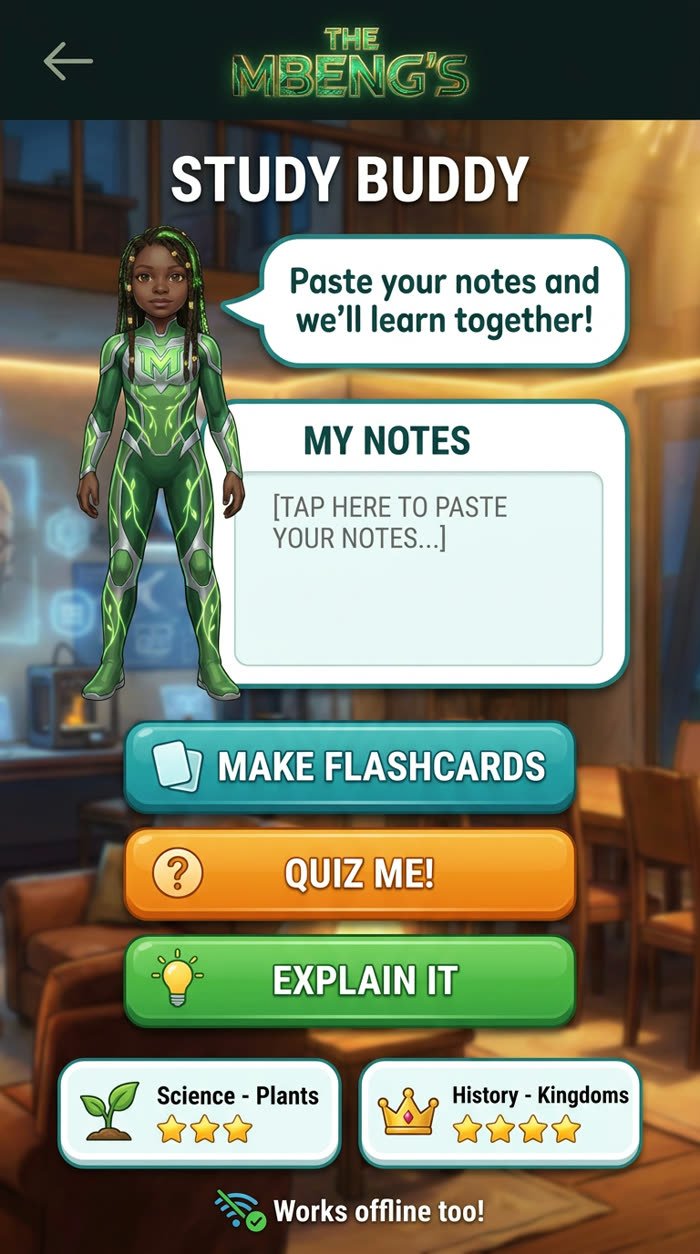
Freemium learning companion starring the Mbeng siblings — Nweh words, culture quests, homework help. Subscription revenue independent of ad markets.
Series licensing to streamers and broadcasters serving Africa & diaspora: Showmax, Canal+, TV5Monde, national TV. A 52-episode library is exactly what buyers want.
Character merchandise, e-books, music releases (the theme song already exists), and 24/7 catalog streams once the library is deep enough.
Every media company's lesson: don't rent your whole audience from an algorithm. Study Buddy lives on our own website alongside the episodes — a safe, parent-trusted learning app where the characters kids love teach language, culture and school skills. It converts free viewers into subscribers, works in low-CPM markets where ads don't pay, and gives diaspora parents the "connection to home" they're actively seeking.
Kids-media economics reward two things we're built for: a deep library and a relentless cadence. Revenue compounds as the 52-episode catalog grows — ads first, then sponsorships, then licensing and Study Buddy subscriptions on top. Three scenarios, 24 months out:
cumulative by month 24 · ~15k subs at month 12
cumulative by month 24 · ~50k subs at month 12
cumulative by month 24 · 150k+ subs at month 12
Assumptions: weekly episodes + 2 shorts/week, diaspora-first ad targeting (US/UK/CA/FR CPMs), blended RPM $1.50 on made-for-kids content and ~$8 on the parent-facing companion channel, sponsorship rates benchmarked to small kids-media channels, licensing per-episode rates at the low end of the African streamer market. In the base case the $66k raise is recouped during year 2 — while the library (52 episodes of owned IP) keeps its licensing value permanently. Full model in the data room.
Derived line-by-line from Episode 1 actuals and verified July 2026 platform pricing — the worksheet is open to any investor. Production and marketing are budgeted separately, so you can see exactly what making the show costs versus what growing the audience costs. Year one is deliberately creator-led on a $2,000/month stipend — nearly every dollar goes to episodes and audience.
| Production — 52 episodes in native 4K | Amount | What it buys |
|---|---|---|
| AI generation + reasoning | $15,500 | Native-4K masters, ~90 shots/ep, ≤15% retake margin, agent direction included |
| Creator stipend | $24,000 | $2,000/month — the founder writes, directs and ships every episode |
| RTX 5090 workstation | $5,500 | Local iteration & previz — pays for itself in saved credits inside year one |
| Music & audio | $500 | Suno subscription for score; vocals produced in DaVinci Resolve (already owned) |
| Post & software | $500 | Topaz Video AI + plugins — DaVinci Resolve edit suite already owned |
| Contingency (~10%) | $5,000 | Model price changes, reshoots, opportunities |
| Production total | $51,000 | 480p tier: ~$38k · 1080p tier: ~$44k |
| Marketing & community — budgeted separately | Amount | What it buys |
|---|---|---|
| Diaspora-targeted campaigns | $6,000 | Geo-targeted trailer & episode ads: US, UK, France, Canada, Germany |
| Creator collaborations | $4,000 | African family & kids channels, reaction and co-watch formats |
| Community & events | $2,500 | Diaspora associations, churches, African schools abroad, watch parties |
| French localization | $2,500 | Subtitles + dub passes on top episodes for the francophone diaspora |
| Marketing total | $15,000 | Combined ask: $66,000 |